5 App-to-Web Experiment Results
3min Read
The most interesting shift in consumer app monetization isn’t a new paywall design. It’s where the transaction happens.


Zach Witzel
CEO, Helium
After Epic v. Apple in 2025, US apps can route users to web checkouts and skip the 30% platform fee on in-app payments.
That’s what Helium’s app-to-web flow is for.
What App-to-Web does
When a user clicks “Start for free” or “Subscribe now”, instead of paying in-app, they’re routed to the web where they can securely pay for the subscription and be rerouted back into the app.
Helium’s app-to-web flow makes the handoff seamless, offering a native-feeling, beautifully designed payment experience for every eligible user.
No need for an app update, you can launch app-to-web right from the Helium dashboard.
We’ve shipped app-to-web with a ton of consumer apps across different categories. Below are the initial rollout results for five of them, anonymized for customer privacy.
I must say…
The numbers speak volumes
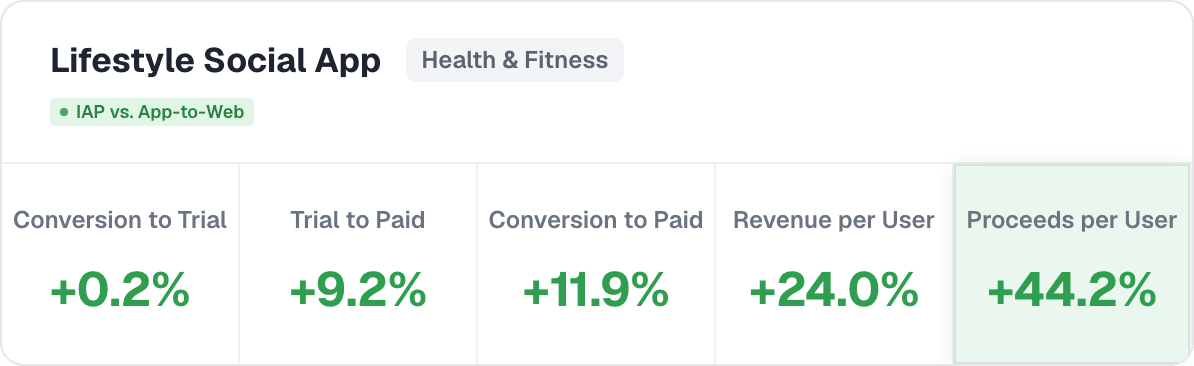
1. Lifestyle Social App (Health & Fitness)
Three-page trial paywall defaulting to annual.
The cleanest win of the group, with flat trial starts (+0.2%), but trial-to-paid conversion up 9.2%, overall conversion to paid +11.9%, and revenue per user +24%. Proceeds per user landed at +44.2%. Huge win.
2. Productivity Assistant (Productivity)
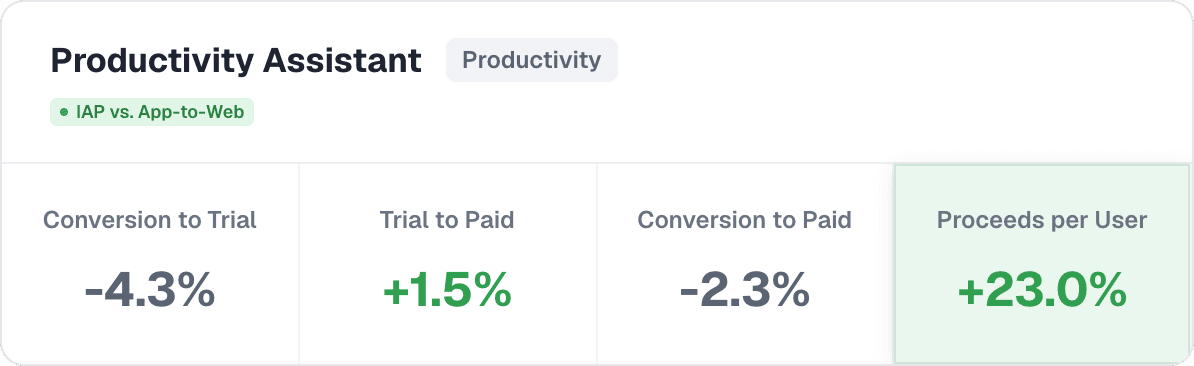
Two-page trial-oriented paywall with only two annual offerings.
Conversion to trial -4.3% relative, trial conversion +1.5%, conversion to paid -2.3%. Proceeds per user: +23%.
3. Health Tracking App (Health & Fitness)
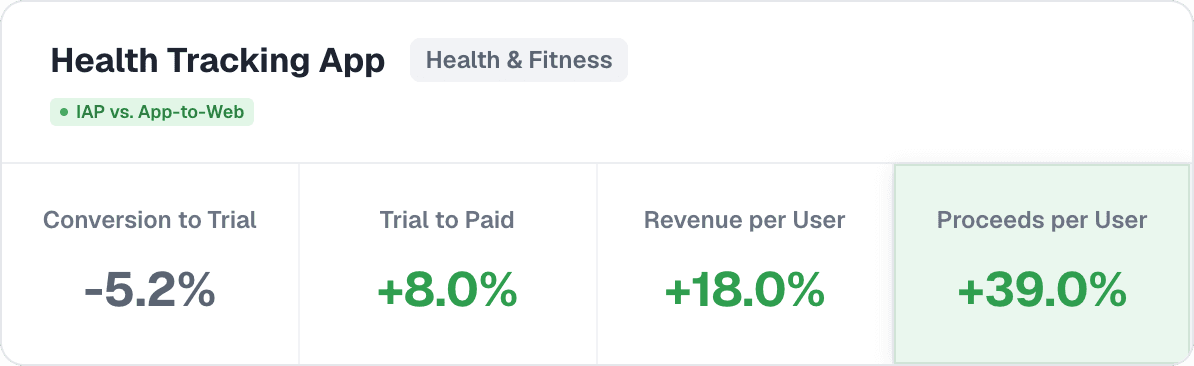
One-page in-app and out-of-app paywall highlighting a paid trial.
Trial starts dropped -5.2%, but despite fewer people in the funnel, trial conversion rose +8%, ARPU +18%, and proceeds per user +39%.
Fewer trials, better better. The web flow filtered out some of the low-intent starts and converted the rest at a much higher rate.
4. Task Management Tool (Utilities)
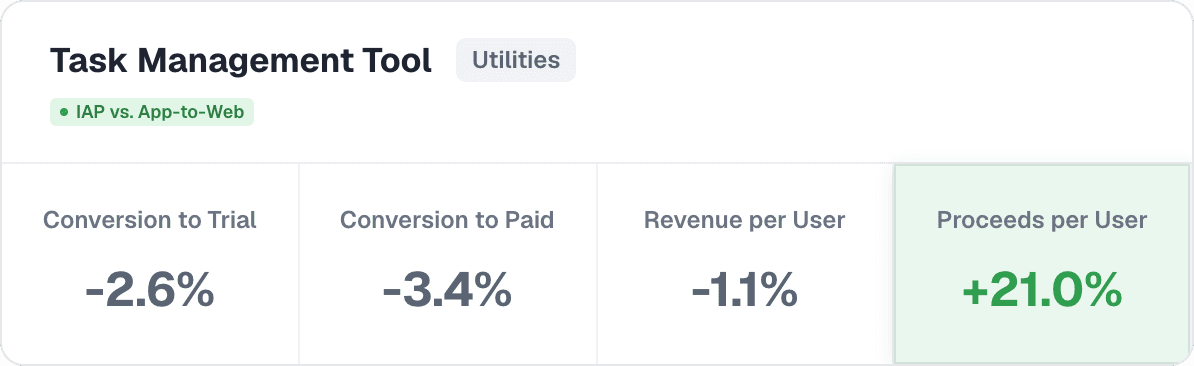
Trial-oriented paywall with monthly and annual options with a second-try discount.
Despite trial starts (-2.6%), conversion to paid (-3.4%), and revenue per user (-1.1%) softening, proceeds per user still came in at +21%.
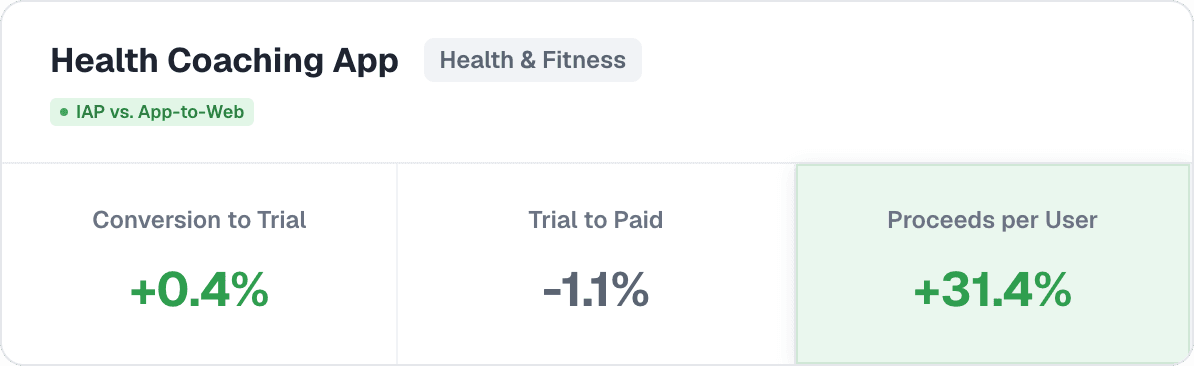
5. Health Coaching App (Health & Fitness)
One-page in-app paywall linking to a single annual apple pay subscription.
Trial starts at +0.4%, trial conversion -1.1%, revenue per user flat, yet proceeds per user: +31.4%.
Want help getting started?
Most of the work with app-to-web isn't the swap itself, it's the routing, the checkout, the entitlements, the pricing tests and the experiment read-out. At Helium, we get you set up with all of that. You approve; we build and report back.
With our onboarding specialists, the process is seamless, and you can start taking back your hard-earned money right away.
See how much you can make with App-to-Web.